
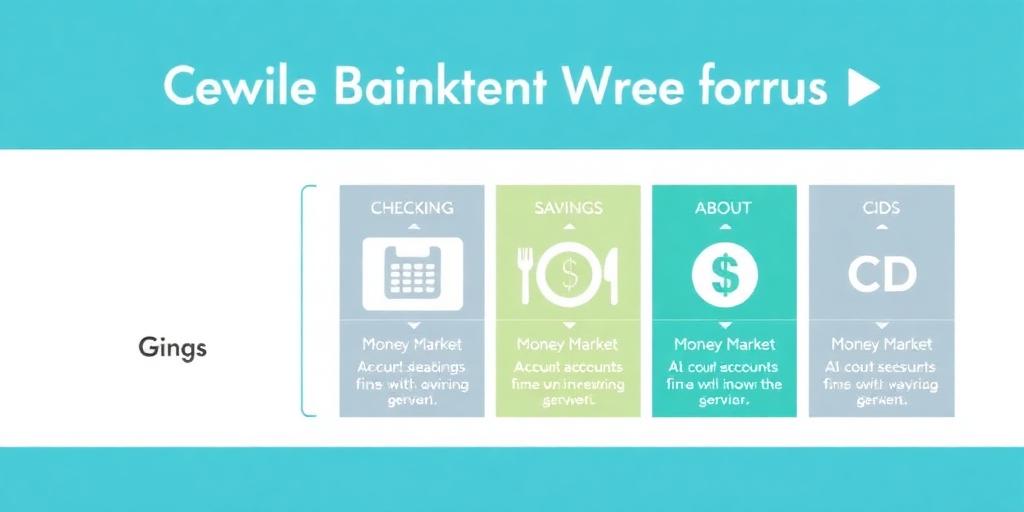
The Investor's Guide to Choosing the Right Bank Accounts for Personal Needs
Choosing the right bank accounts is a foundational step in managing your finances effectively, whether you're a seasoned investor or just starting. Different accounts serve different purposes, and understanding these differences is crucial for optimizing your financial strategy. This guide will walk you through the various types of bank accounts available and how to select the ones that best suit your personal needs.
Understanding Your Banking Needs
Before diving into the types of accounts, take a moment to assess your specific needs. Consider the following questions:
- What are your primary goals for your bank accounts? (e.g., everyday spending, saving for a down payment, earning interest)
- How often do you access your funds? (e.g., daily, weekly, monthly)
- What is your average monthly balance? (This can affect fees and interest earned.)
- Do you need specific features? (e.g., online bill pay, mobile check deposit, international transactions)
Types of Bank Accounts
Checking Accounts:
- Purpose: Primarily used for everyday transactions – paying bills, making purchases, and withdrawing cash.
- Features:
- Debit cards for convenient spending.
- Online and mobile banking for easy access.
- Check-writing capabilities (though less common now).
- Considerations:
- Look for accounts with no monthly fees or easily waivable fees (e.g., by maintaining a minimum balance).
- Consider overdraft protection options to avoid costly fees.
- Some checking accounts offer minimal interest, but don't expect high returns.
Savings Accounts:
- Purpose: Designed to hold funds you're saving for short- to medium-term goals.
- Features:
- Earn interest on your balance.
- FDIC insurance (up to $250,000 per depositor, per insured bank).
- Limited withdrawals per month (typically six).
- Considerations:
- Interest rates vary widely; shop around for the best rates.
- High-yield savings accounts (HYSAs) generally offer the most competitive rates.
- Be mindful of withdrawal limits to avoid fees.
Money Market Accounts (MMAs):
- Purpose: A hybrid between checking and savings accounts.
- Features:
- Higher interest rates than traditional savings accounts.
- Limited check-writing and debit card access.
- FDIC insurance.
- Considerations:
- Often require higher minimum balances than savings accounts.
- Interest rates are typically tiered, meaning higher balances earn higher rates.
Certificates of Deposit (CDs):
- Purpose: To save money for a fixed period (term) at a fixed interest rate.
- Features:
- Higher interest rates than savings accounts, especially for longer terms.
- FDIC insurance.
- Considerations:
- Your money is locked up for the term; early withdrawal penalties apply.
- Interest rates are fixed, so you won't benefit if rates rise during the term.
- Consider laddering CDs to stagger maturity dates and access funds more frequently.
Choosing the Right Accounts: A Step-by-Step Guide
- Define Your Goals: Clearly identify what you want to achieve with each account. Do you need a convenient way to pay bills, save for a specific goal, or earn a return on your cash?
- Compare Interest Rates and Fees: Shop around at different banks and credit unions to find the best rates and lowest fees. Online banks often offer more competitive rates due to lower overhead costs.
- Consider FDIC Insurance: Ensure your accounts are FDIC insured to protect your deposits in case of bank failure.
- Evaluate Account Features: Consider the features that are important to you, such as online banking, mobile app access, ATM availability, and customer service.
- Read the Fine Print: Understand the terms and conditions of each account, including fees, minimum balance requirements, and withdrawal limits.
- Optimize Regularly: Review your bank accounts periodically to ensure they still meet your needs. As your financial situation changes, you may need to adjust your account selection.
Integrating Bank Accounts into Your Investment Strategy
Your bank accounts play a crucial role in supporting your investment strategy:
- Emergency Fund: Keep your emergency fund in a high-yield savings account or money market account for easy access and modest returns.
- Short-Term Savings: Use savings accounts or CDs for short-term savings goals, such as a down payment on a car or vacation.
- Investment Capital: Keep funds earmarked for investment in a separate checking or savings account for easy transfer to your brokerage account.
Conclusion
Choosing the right bank accounts is a fundamental aspect of personal finance and investing. By understanding the different types of accounts and carefully evaluating your needs, you can optimize your banking strategy to achieve your financial goals. Regularly review your accounts and adapt as your circumstances change to maintain a healthy and effective financial foundation.


